Prop firm news
Industry moves: rule changes, payouts, new launches, warnings.
30 updates
 News
NewsPipFarm launches multi-currency accounts in USD, EUR, GBP
PipFarm introduced multi-currency account support to attract international traders beyond Western markets. The move addresses the growing global reach of prop trading but also highlights risk management challenges. Currency flexibility can reduce conversion costs for non-US traders and broaden firm appeal.
 Warning
80–100 prop firms shut down in 2024 industry shakeout
Between 80 and 100 prop firms closed in 2024 as pass rates plummeted and trader investment dropped 50%. Coordinated cheating, thin margins, and regulatory pressure drove exits, while a few dominant firms emerged stronger. Traders must vet firm stability carefully as the sector consolidates and weaker operators disappear.
 Warning
The Funded Trader delays payouts for six months, presents 'eligibility' solution
The Funded Trader has left traders waiting for frozen payouts since late March, now announcing an eligibility review process to expedite resolutions. Prolonged payout freezes damage firm reputation and trap trader capital. This is a major red flag for anyone considering TFT or holding open positions there.
 Payout
Hola Prime hires Deloitte to audit payouts amid prop firm transparency crisis
Hola Prime has engaged Big Four auditor Deloitte to verify its payout claims, a rare move in an industry where most firms rely on unaudited dashboards or blockchain trackers. The audit comes as trust issues and payout disputes plague competitors. Traders should view third-party audits as a green flag when evaluating firm credibility.
 Warning
FundingTicks prop firm begins shutdown after retroactive rule changes spark backlash
FundingTicks is winding down operations following trader outrage over retroactive rule changes, including profit cuts and new trading limits. The firm gave funded traders just hours to flatten positions. This marks another closure in a sector already seeing 80–100 firm exits in 2024, raising due diligence urgency for traders selecting firms.
NewsInstant Funding acquires Funded Trading Plus in prop firm consolidation
Instant Funding has purchased Funded Trading Plus, with both firms continuing separate operations for now. This follows Topstep's earlier acquisition of The Futures Desk, signaling industry consolidation. For traders, M&A activity can mean rule changes or platform shifts down the road, though no immediate changes are promised.
 News
NewsE8 Markets hit by DDoS attack, account access disrupted
Prop firm E8 Markets suffered a distributed denial-of-service cyberattack that disrupted trader account access. The incident follows a similar DDoS attack on FundingPips. Traders face platform downtime and potential execution issues during active positions.
 News
NewsFTMO launches FTMO Futures trading arm in beta
Prague-based FTMO quietly launched FTMO Futures, offering prop trading in futures products with three account tiers from $50K to $150K priced $119-$229/month. The beta expansion gives FTMO traders access to a new asset class beyond forex and CFDs.
 Payout
The Funded Trader delays payouts into 2026 amid six-month backlog
Traders waiting over six months for withdrawals from The Funded Trader may not see funds until next year. The firm is auditing banned users and working through outstanding issues but confirms significant delays. Liquidity concerns mount for traders relying on payout income.
 Rule change
MyFundedFX reverses controversial consistency rule after trader backlash
Prop firm MyFundedFX scrapped its newly implemented consistency rule just two weeks after rollout, citing trader frustration that the rule limited strategic flexibility and created payout barriers. The reversal shows firms responding quickly to community pressure on rule changes.
WarningSurgeTrader shuts down permanently after losing Match-Trader license
Florida-based SurgeTrader closed one week after Match-Trade Technologies terminated its trading platform access. The firm was unable to resolve the termination despite efforts. Traders with active accounts or pending payouts face uncertainty about fund recovery.
PayoutThe Funded Trader delays large payouts until Q4, may extend into 2025
The Funded Trader will begin processing suspended accounts over $100K in Q4 2024 but completion may stretch into December or beyond. The firm says it has repaid 30% of trader debts and 55% of affiliate debts. Traders with pending payouts face continued uncertainty.
 News
NewsThe Funded Trader admits 98-99% of traders never reach payout stage
The Funded Trader disclosed that only 1 in 20 traders pass their challenges, and 98-99% never receive payouts. Most fail the initial challenge (90-95%), and 80% of those who get funded still don't qualify for withdrawals. The firm's pass rate is lower than industry averages.
 News
NewsThe Funded Trader announces futures spin-off amid ongoing payout delays
The Funded Trader announced a new entity called The Futures Trader targeting futures markets, despite months of unresolved payout issues. The announcement was met with backlash from clients on social media who remain unpaid. Details on the new venture are scarce.
WarningThe Funded Trader pauses all operations, promises relaunch with new look
The Funded Trader has paused all operations and posted a 21-day countdown on its website. CEO Angelo Ciaramello said the brand will relaunch with a different look and feel, but specifics on timing and what changes are coming remain unclear. Traders with pending payouts or funded accounts face further uncertainty.
 News
NewsCity Traders Imperium CEO predicts half of cheaper rivals will close within six months
CTI's CEO warns that many low-cost competitors lack sufficient cash reserves to survive the current shakeout, stating CTI maintains a year of operating reserves. The comment comes as 80+ prop firms closed from 2024-2026, many after MetaQuotes withdrew platform support, forcing a consolidation in the overcrowded sector.
 News
NewsFTMO launches futures trading beta after acquiring OANDA
FTMO opened a futures trading arm in beta, diversifying beyond CFDs following MetaQuotes restrictions on US-focused prop platforms. The move follows FTMO's December acquisition of retail broker OANDA from private equity firm CVC and its resumption of services to US traders on MetaTrader 5.
 Warning
Alpha Capital bans 150 traders over group trading allegations
Prop firm Alpha Capital Group suspended over 300 accounts linked to alleged coordinated group trading violations. The firm acknowledged some bans may have been incorrect and pledged to restore wrongly suspended accounts this week. Investigation outcomes will determine which traders are permanently removed.
 News
NewsFTMO to shut down OANDA Prop Trader programme by end of March
FTMO will discontinue the OANDA Prop Trader programme on 31 March 2026, ending the initiative that existed before FTMO's 2025 acquisition of OANDA. Traders in the programme should prepare for account migration or closure. No details yet on whether existing participants will transition to standard FTMO offerings.
NewsFTMO launches futures prop trading in beta
Prague-based FTMO expands into futures market with beta product called FTMO Futures. Traders complete evaluation before accessing Sim-Funded Accounts. Move follows MetaQuotes restrictions on US-focused prop firms, pushing established players to diversify platforms and product lines.
Rule changeFundingTicks faces backlash over retroactive rule changes, including trade hold time
Futures prop firm FundingTicks applied rule changes retroactively to existing accounts, including a new one-minute minimum hold time for scalpers and altered profit splits. CEO claims $220M in payouts but traders report widespread account violations from rules applied after trades were placed.
 News
NewsTrue Forex Funds plans relaunch after MetaQuotes license termination
Hungary-based prop firm True Forex Funds lost MT4/MT5 licenses, forcing shutdown. The firm now announces plans to restart operations next week, likely on alternative platforms. Traders with active accounts should monitor for migration details and potential rule changes during the transition.
 Payout
Hola Prime averages 33-minute payouts, wins fastest payout award for MEA region
Hola Prime reported average profit split payout times of 33 minutes and 48 seconds, earning recognition as fastest payout prop firm in the Middle East and Africa. The firm attributes speed to front-loading compliance and KYC checks rather than compressing them at payout. Fast payouts reduce trader capital lockup and improve cash flow.
Rule changeFundingPips adds Tradovate platform and enables copy trading across funded accounts
FundingPips launched Tradovate integration for futures traders and introduced cross-account copy trading allowing replication across up to six 50K or three 100K funded accounts. Rule change expands automation potential for profitable traders but adds execution risk if strategy fails across multiple accounts simultaneously.
PayoutThe Funded Trader repaid only 30% of outstanding debts, some traders wait six months for payouts
TFT reported it has cleared just 30% of trader debts and 55% of affiliate payments months after suspending payouts. Firm addressing accounts breached in March and DXTrade server error victims. Traders with pending withdrawals face extended delays with no firm resolution timeline beyond Q4 2024.
WarningFunds for Traders shuts down after Eightcap cuts MT4/MT5 support for prop firms
Netherlands prop firm Funds for Traders closed permanently after its executing broker Eightcap terminated MT4/MT5 platform access for prop trading operations. This follows a broader pattern of platform providers restricting prop firm services. Traders using Eightcap-backed prop firms face potential disruptions.
 Rule change
FundingTicks faces backlash over retroactive rule changes
Futures prop firm FundingTicks triggered trader outrage after reportedly applying rule changes retroactively, including a new one-minute minimum hold time for scalpers. The changes affected traders already in evaluation or funded stages. Retroactive enforcement is a major red flag for fairness and trader trust in the firm.
WarningProp firm Karma in advanced acquisition talks after announcing closure last week
Karma Prop Traders, which shut down citing unsustainable roadblocks, is now in advanced negotiations with a leading prop firm to acquire its client base. This signals potential continuity for traders but highlights the fragility of newer firms. Watch for official buyer announcement and account migration terms.
PayoutFintokei launches instant withdrawals as payout volume surges 118% year-over-year
Czech prop firm Fintokei introduced instant withdrawal processing after payout volume jumped 118%. The firm maintains a 98.4% payout success rate, with most rejections tied to fraud or verification issues. Faster payouts may attract traders seeking quick access to profits.
Geopolitical news
Wars, sanctions, elections, and political shocks moving the markets you trade.
12 updates
 Geopolitics
Oil rises on Iran conflict fears as Trump threatens to end ceasefire
WTI crude climbed above $85 and Brent near $91 as Trump said he would not extend the Iran ceasefire, reigniting Mideast conflict fears. Tensions around the Strait of Hormuz and supply disruption risks support oil. Traders in energy futures and inflation-sensitive assets should watch for further escalation impacting crude and equity volatility.
 Geopolitics
Markets rally as US-Iran tentative war deal sends oil prices down 4.8%
Stocks surged globally and Brent crude fell 4.8% to $83 after the US and Iran reached a tentative deal, easing war fears. Lower oil prices relieve inflation pressure on equities and risk assets. Traders should watch for deal confirmation—any breakdown could reverse gains quickly and spike oil back above $100.
 Geopolitics
Iran conflict reignites, exposing oil market's depleted inventory buffer
The global oil market absorbed earlier Iran war shocks via Asian demand cuts and inventory drawdowns, but those buffers are now thin. A fresh escalation or infrastructure strike could trigger a supply shock, pushing Brent crude sharply higher. Prop traders in oil and indices should watch Middle East headlines closely for volatility catalysts.
 Geopolitics
Oil prices volatile as Iran conflict disrupts Strait of Hormuz shipping
Oil and gas prices surged then dipped amid Iran war escalation that virtually halted Strait of Hormuz traffic—a critical waterway for global energy. Elevated energy costs threaten inflation and could delay central bank rate cuts, pressuring equities while lifting energy sector and gold safe-haven flows.
 Geopolitics
Geopolitics reshapes US equities: energy, defense gain while tech faces pressure
Rising Middle East tensions and strategic competition are shifting market structure. Energy and defense sectors benefit from supply risk and spending, while tech faces regulatory and supply-chain headwinds. Traders should position for sector rotation as geopolitical risk premiums reprice equity markets.
 Geopolitics
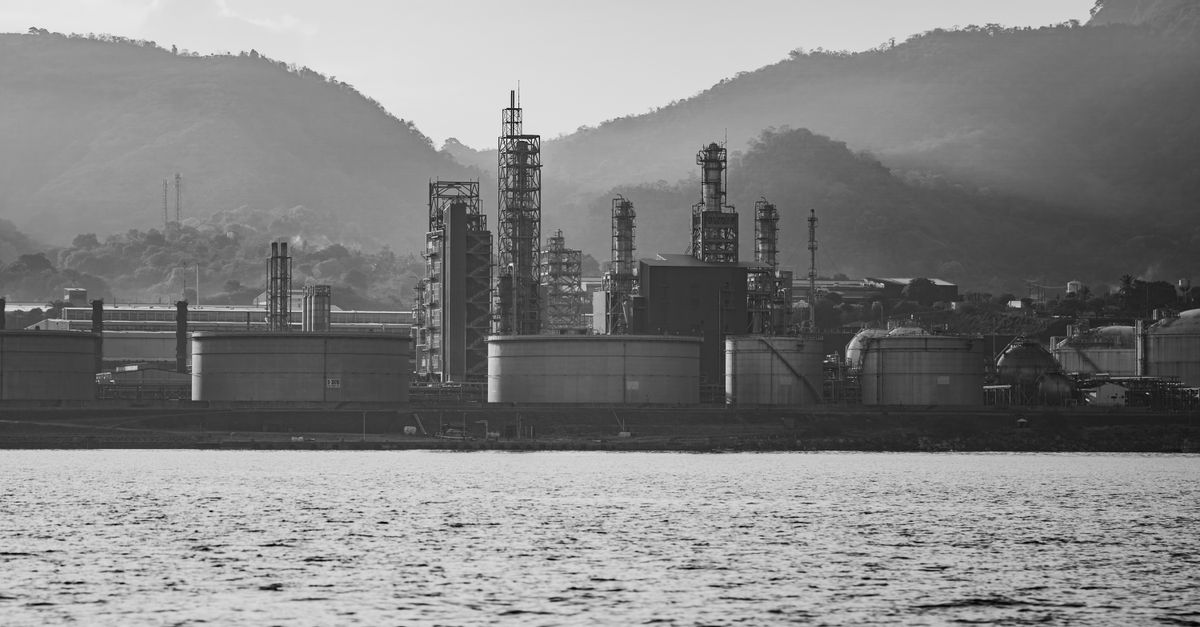
US widens Iran sanctions; WTI crude falls 2.4% to $85 despite supply disruption risk
WTI settled down 2.4% at $85.01 and Brent fell 2.4% to $92.17 as expanded US sanctions on Iran took effect. Analysts warn the real risk is not the sanctions themselves but potential Iranian retaliation targeting Middle East oil infrastructure, which could trigger sharp upside volatility in crude and equity sell-offs.
 Geopolitics
Oil holds near one-week high on Russia supply concerns and Ukraine talks
Crude remained elevated on worries about disruptions in Russia and the US as Washington attempts to broker a Ukraine peace deal. Market participants are weighing three bullish drivers: Russia sanctions, Iran tensions, and OPEC supply cuts. Watch for crude volatility as geopolitical clarity emerges.
GeopoliticsTrump sanctions on Iran partners shake oil markets; traders assess supply risk
New U.S. sanctions targeting Iran partners initially spiked oil prices but markets stabilized as traders questioned enforcement. Iran vows retaliation; China says cooperation will continue. Oil settled down 3%+ as initial panic faded, but supply disruption risks remain through Strait of Hormuz. Watch crude and energy equities for volatility.
GeopoliticsIran conflict sends oil up 9%, stock futures down; Hormuz Strait traffic halved
War in Iran pushed Brent crude to $79.48 (+9.1%) and WTI to $72.51 (+8.2%) as traders fear Strait of Hormuz disruptions. Stock futures tumbled on geopolitical risk. The strait normally handles 20% of global oil and LNG; ship traffic already cut in half. Expect continued volatility in energy and equity indices.
 Geopolitics
US and Iran exchange fire after month-long ceasefire ends, oil and gold markets react
Military action resumed between US and Iran following breakdown of temporary ceasefire. Traders should expect heightened volatility in crude oil (supply disruption risk), gold (safe haven demand), and equity indices (geopolitical risk-off). Watch WTI/Brent spreads and VIX for continuation signals.
GeopoliticsIran conflict escalates: Gulf security architecture shifts after six months of war
Six months into the Iran war, Gulf states are restructuring security agreements, exposing vulnerabilities in energy infrastructure, ports, and shipping. Oil traders should price in elevated geopolitical risk premiums. Expect continued volatility in crude, with missile threats keeping supply disruption fears alive.
Markets & central banks
Rate decisions, inflation prints, recession signals, and major index moves.
13 updates
 Markets
Fed acknowledges tighter financial conditions as market does its work
The Fed signaled that market-driven tightening of financial conditions has partially done its job, yet provided little detail on next steps. The 30-year Treasury yield climbed above 5.25%, nearing a 20-year high, while stocks and the dollar fell. Higher yields pressure equities and can strengthen the dollar, impacting FX and bond traders.
 Markets
Stock indexes fall on chip stock slide and geopolitical tensions
Major US indexes dropped Monday as AI-linked chip stocks slid ahead of Nvidia earnings and geopolitical tensions intensified. The combination of sector weakness and macro uncertainty pressured equities. Traders should monitor tech-heavy Nasdaq for volatility and safe-haven flows into gold and Treasuries if risk-off sentiment deepens.
 Markets
Oil at $89 after six months of Iran war defies worst-case supply shock forecasts
Despite a half-year Iran conflict disrupting Strait of Hormuz flows, Brent crude sits at $89—23% above pre-war levels but well below the $120+ many analysts predicted. The global economy has adapted by sourcing energy elsewhere. Traders should note resilience in supply chains, though any production infrastructure hit could still send prices spiking.
MarketsStock indices rally and oil drops after US-Iran ceasefire deal announced
US equity indices jumped sharply—Dow +1%, S&P 500 +1.6%, Nasdaq +2.5%—after a US-Iran deal eased Middle East tensions and sent crude oil lower. The relief rally benefits risk assets and reduces inflation pressure, potentially supporting dovish Fed policy and sustaining equity uptrends.
MarketsOil volatility rises as Trump threatens Russia sanctions, market doubts follow-through
Oil prices retreated despite Trump's threat of tariffs on Russia and its trading partners if no Ukraine deal is reached in 50 days. Analysts say the 50-day buffer keeps disruption risk priced as temporary. Crude traders face whipsaw moves as markets weigh Trump rhetoric vs. actual policy execution.
MarketsOil whipsaws from $120 to below $90 as Iran war fears ease, lifting US stocks
US equities erased early losses after oil prices plunged from near $120/barrel back below $90 on speculation that Iran conflict risks are receding. Traders should watch crude volatility closely—sustained spikes above $100 typically pressure indices via inflation fears, while sharp drops boost risk appetite and equity rallies.
MarketsECB analysis: Oil price response to Iran war restrained by inventories, demand flexibility
European Central Bank notes oil prices rose less than historical norms despite unprecedented Iran supply disruption. Initial market conditions, inventories, and expectations of temporary shortage dampened price response. Comparison to Ukraine war shows disruption size alone doesn't determine price moves — watch positioning and sentiment, not just headlines.
 Markets
Western sanctions on Russia send Brent crude above $100 as banks blocked from SWIFT
Brent settled up 3.1% at $100.99 after touching $105.07 as Western allies cut Russian banks from SWIFT payment system, threatening oil export disruption. Tight global supply could tighten further. Energy traders watch for sustained break above $100; equity indices face headwinds from energy shock and sanctions spillover.
MarketsOil prices gain on Iran supply disruption fears as US-Iran conflict escalates
Crude markets rally on renewed Iran conflict threatening Middle East supply flows. Concurrent Venezuela crude export uncertainty adds complexity. Energy traders should monitor WTI/Brent for breakout above recent ranges; geopolitical premium building into prices could support long positions with tight stops.
MarketsTrump oil sanctions on Russia spark price spike then skepticism
Oil prices initially surged after U.S. sanctions hit Russia's Rosneft and Lukoil but traders now question long-term impact. Markets moved past knee-jerk reaction as investment banks assessed whether sanctions will truly disrupt Russian supply. Policy uncertainty around enforcement and strategic reserve use adds volatility. Traders should monitor crude for reversal if sanctions prove symbolic.
 Markets
Gold rallies, Bitcoin soars as geopolitical uncertainty and financial risk drive safe-haven flows
Gold climbed and Bitcoin surged amid heightened geopolitical tensions and regulatory shifts. Jobless claims data tempered Fed rate-cut expectations to 56% for December, down from 72%. Traders in precious metals and crypto see continued upside from macro uncertainty and slower Fed easing.
 Markets
Oil prices surge 3% to two-week high on Iran war supply disruption fears
WTI crude jumped 3% as Iran war escalation raised supply shock concerns. Energy execs warn of tightening availability beyond just high prices. Traders should watch for further sanctions or infrastructure attacks that could push crude above recent highs and spike refined product costs.